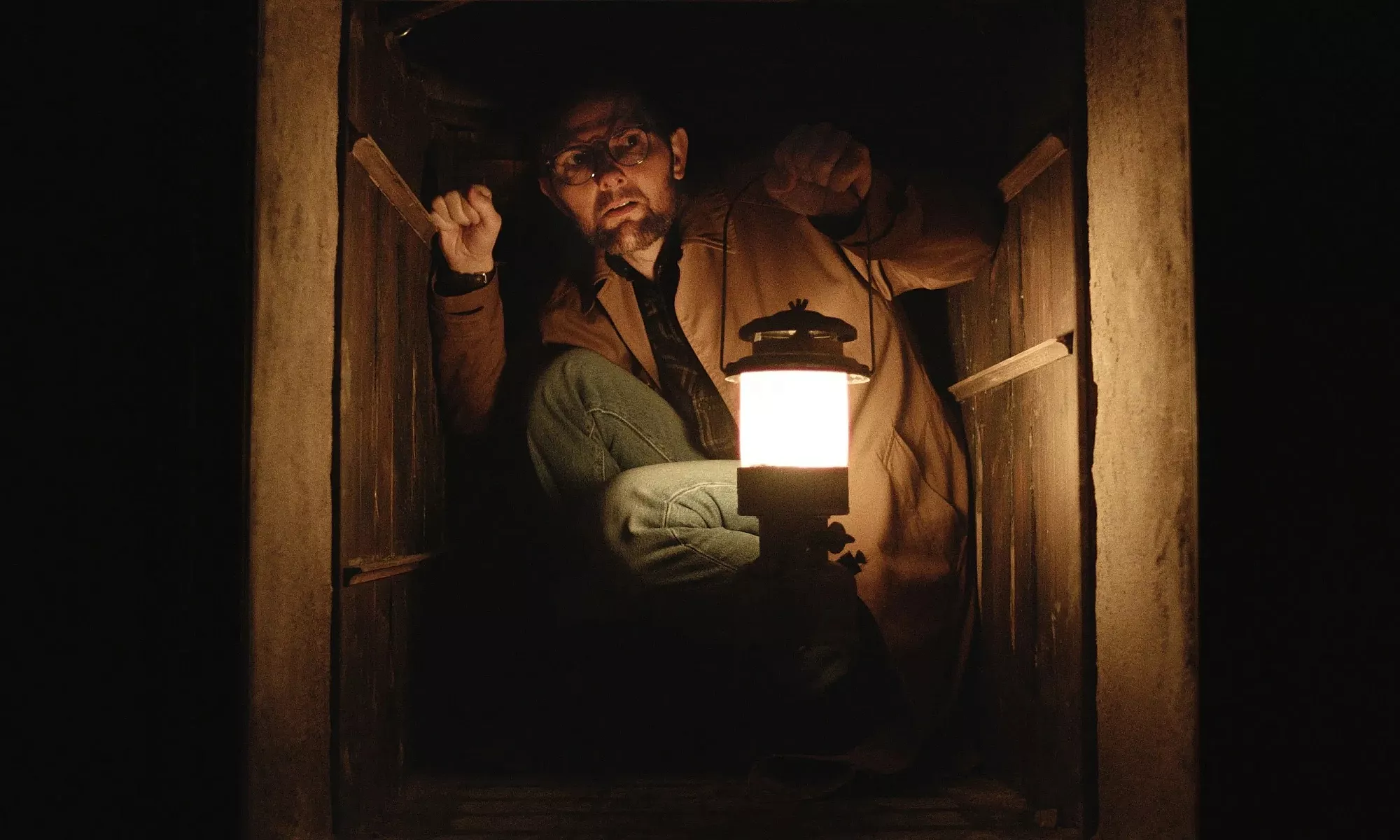
A slow-burn folklore horror elevated by masterful tension, atmosphere, and a compellingly fractured lead.
Hokum sees director Damian McCarthy continue to carve out his lane in folklore-infused horror, following the eerie success of Oddity. Set within the confines of a remote Irish hotel steeped in myth, the film blends supernatural dread with grounded human unease – delivering a very strong horror experience.
“An atmosphere you can almost feel closing in.”
At the centre is a writer played by Adam Scott, who returns to the hotel his late parents once visited – said to be the last place they were truly happy. He arrives to scatter their ashes and to find an ending for his own story, but quickly becomes entangled in the hotel’s dark folklore, particularly the rumour of a witch haunting the Honeymoon Suite.
What unfolds is a steady blurring of the supernatural and the psychological, with the film leaning into ambiguity in a way that keeps you constantly questioning what’s real.
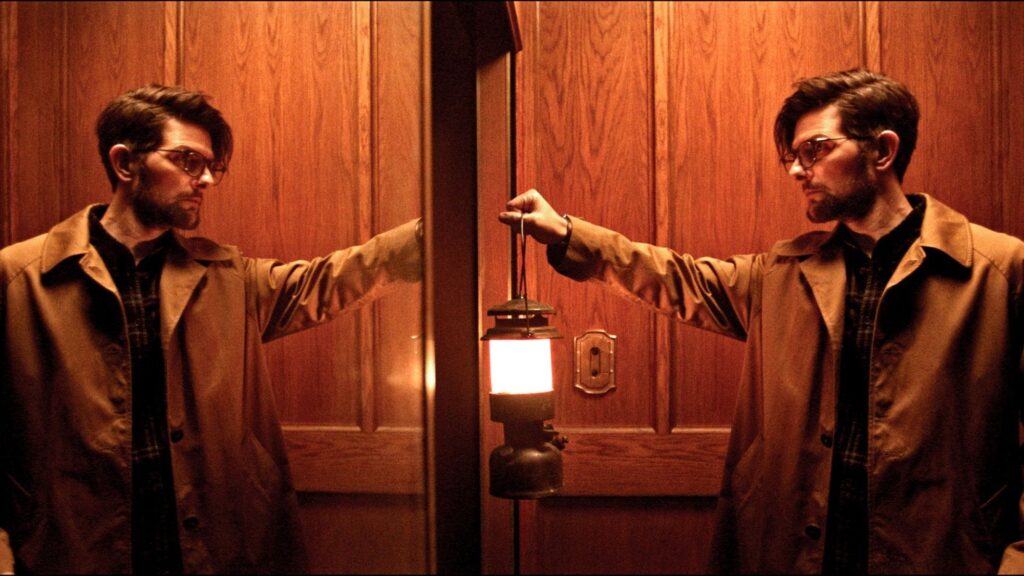
Scott is excellent here, playing a character who is, bluntly, a bit of a dick, but it works. He delivers that abrasiveness with such ease that you almost find yourself amused at just how cutting he can be. Beneath that surface, though, there’s something more fractured going on.
His character is carrying his own demons, and that internal conflict runs parallel to the mystery surrounding the hotel. It’s this combination – his unraveling psyche, the film’s underlying enigma, and its almost escape room-like structure – that keeps things consistently engaging.
McCarthy’s direction is where Hokum truly excels. The film takes its time, but never feels idle, building a thick, suffocating sense of dread that lingers in every frame. It’s a style reminiscent of Oddity, but more refined, more confident. The tension feels deliberate and controlled, with each moment carefully constructed to keep you on edge. When the film does lean into jumpscares, they land precisely because they feel earned, supported by the atmosphere rather than replacing it.
Visually, the film is incredibly assured. The cinematography makes striking use of negative space and lighting, constantly drawing your eye to the edges of the frame, making you question what might be lurking just out of sight. It’s complemented by immersive sound design and strong art direction, all of which combine to create a horror experience that feels genuinely palpable. There’s even a subtle Silent Hill energy running through it all. Foggy, oppressive, and deeply unsettling.
What’s particularly interesting is how Hokum balances that dread with a strange sense of comfort. Set during a Halloween period, it carries an almost cosy horror vibe on the surface, like a familiar seasonal watch, before steadily tightening its grip. It ultimately plays like a throwback to classic haunted house horror, a straightforward premise elevated by a director who clearly understands the genre inside and out.
By the end, Hokum proves that simplicity, when paired with this level of craft and control, can be far more effective than complexity.
A deceptively simple haunted house story elevated by masterful direction and an atmosphere you can almost feel closing in.
Leave a Reply