
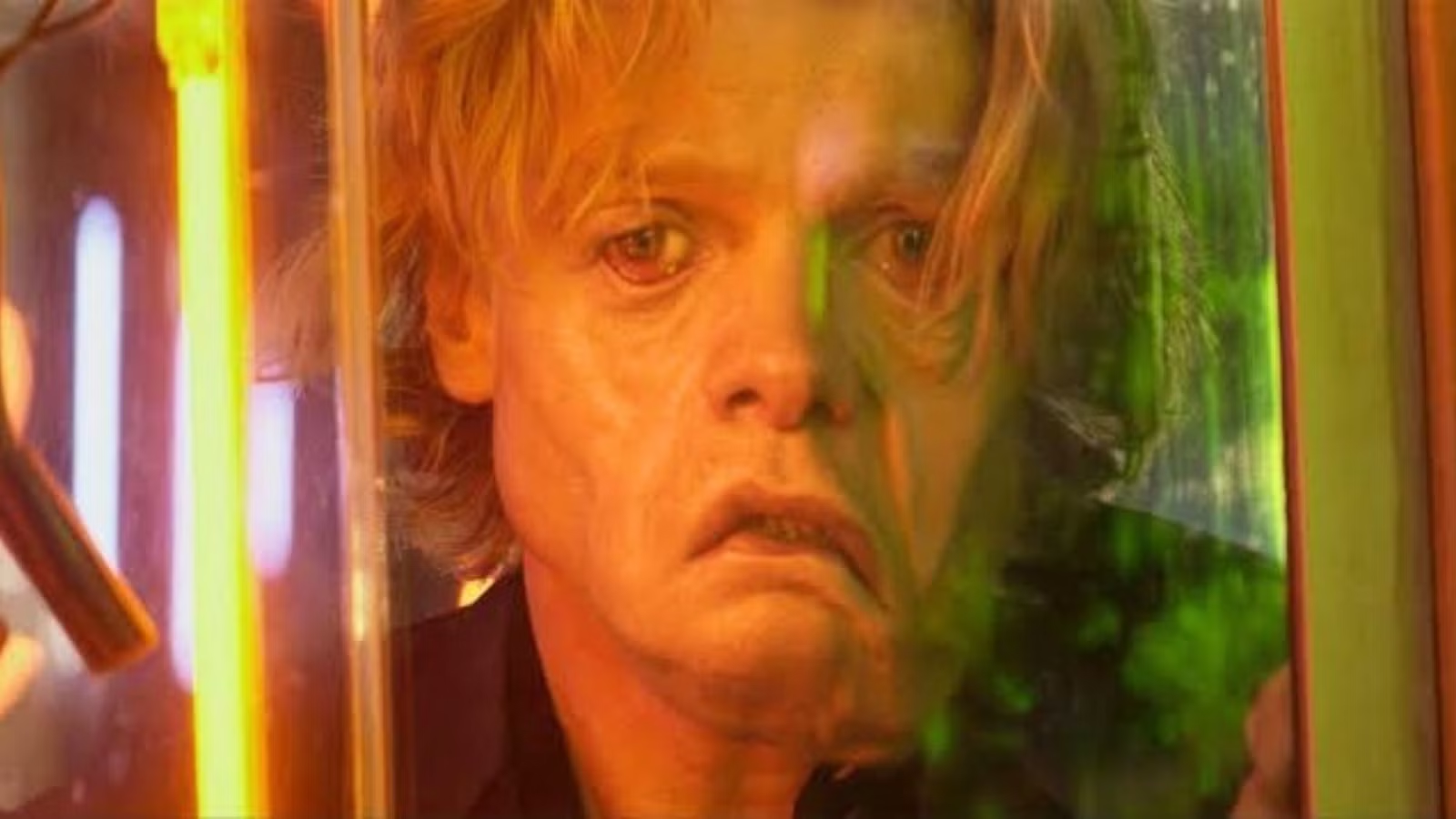
Clayface has all the makings of a grotesque body-horror nightmare, but a fantastic performance from Tom Rhys Harries can only do so much to elevate a film held back by a generic revenge plot and a surprisingly tame approach to its horror.
The idea of exploring Clayface through a disturbing body-horror story about identity, obsession and the loss of self is packed with potential. As actor Matt Hagen undergoes a nightmarish physical transformation that brings him closer to becoming the infamous DC villain, there’s an opportunity to explore the psychological toll of losing who you are and the lengths you’ll go to for love and acceptance. Unfortunately, the film never quite makes the most of these ideas.
Tom Rhys Harries Elevates the Body Horror
Tom Rhys Harries is undoubtedly the film’s biggest asset, doing a lot of the heavy lifting alongside Naomi Ackie, who is equally as good as Dr Caitlin Bates. Watching Harries gradually undergo this transformation is where the film really works though, capturing the tragedy of a man slowly losing himself. Some of the film’s cleverest filmmaking comes through in the way it captures his transformations to other characters, playing with camera angles and editing make Matt’s abilities feel disorientating. There’s a fantastic sequence in a nightclub making use of the shifting faces and we get glimpses of this uncanny horror that was genuinely unnerving at times.

That’s why it’s frustrating that Clayface doesn’t push these ideas further. For a film centred on a character who can manipulate his own appearance, there’s so much potential for disturbing imagery and genuinely grotesque body horror. Instead, the film feels surprisingly restrained, especially considering its R rating. There are moments that hint at the sheer unpleasantness of Matt’s transformation, but it needed to get much weirder with the concept. Clayface’s abilities should lend themselves to some truly nightmarish sequences, playing on our discomfort with the human form and the unsettling feeling that something familiar is no longer quite right. Too often, the film settles for the bare minimum when it could have delivered something far more inventive.
A Revenge Plot That Undermines Its Central Character
That’s ultimately where Clayface struggles most: its focus feels misplaced. There’s so much potential in exploring Matt’s deteriorating sense of identity and his increasingly disturbing transformation, yet the film repeatedly diverts its attention towards a fairly generic mob revenge plot. As a result, these sequences never feel particularly engaging, doing little to complement the more compelling character study unfolding beneath the surface. The supporting characters largely feel interchangeable, and I found myself far more interested in Matt’s psychological journey than the increasingly conventional story surrounding him.
This misplaced focus undermines Matt’s descent into villainy. I found myself on his side for the majority of the film, which makes his eventual turn towards outright villainy feel particularly abrupt. There’s a missing piece to his characterisation that prevents this descent from feeling entirely earned, and I couldn’t help wondering whether more of Matt’s past had been left on the cutting room floor. The film seems to hint that he was always a little troubled, but it never quite fleshes out those darker tendencies enough to make his transformation feel natural. A stronger build-up could have made his eventual downfall far more devastating.
The film also would have benefited from placing greater emphasis on Matt’s relationship with Ackie’s character. There’s something inherently tragic about the idea of one-sided love, particularly when it becomes tangled up in obsession and a desperate desire to be accepted. Exploring that dynamic in greater depth, while revealing more about Matt’s past, could have given the film a much stronger emotional foundation. Instead, the story becomes increasingly preoccupied with a revenge plot that never feels like a particularly compelling vehicle for the narrative.
There’s still a certain charm to Clayface, though. It reminds me of the kind of B-movie you might stumble across in Blockbuster one evening, pick up because the cover looks cool, and have a perfectly decent time watching. It’s not a bad film by any means, and Harries’ performance alone gives it plenty to appreciate, but it’s difficult not to feel that this could have been something much more daring. For a character with such wonderfully grotesque potential, Clayface plays things a little too safe.
It’s a decent enough time, but I can’t help wishing Clayface had been a little less concerned with being a conventional thriller and a lot more interested in getting under our skin.
Leave a Reply